


Si estás pensando en realizar la transición de Toggl Track a Clockify, es crucial que comprendas a fondo los motivos por los que esta herramienta se posiciona como la opción ideal antes de dar el siguiente paso.
Toma la mejor decisión con nuestra guía comparativa entre Toggl y Clockify, con recomendaciones y pasos clave para realizar tu migración de forma sencilla.
- Toggl Track es un rastreador de tiempo que ofrece integraciones nativas de pago, pero carece de planificación, relojes de fichar y seguimiento de ubicación.
- Clockify y Toggl Track difieren en precio, métodos de seguimiento de tiempo, profundidad de integración, planes gratuitos y capacidades de monitorización y programación.
- Si bien Toggl Track desbloquea funciones avanzadas en planes inferiores, estos son el doble de caros que los planes de Clockify, lo que convierte a Clockify en la opción más rentable.
- Toggl Track es ideal para equipos que valoran la autonomía personal, mientras que Clockify atrae a aquellos que necesitan productividad y responsabilidad en equipo.
- Mensualmente, Toggl Track cuesta entre 9 $ y 20 $, y Clockify entre 3,99 $ y 15,99 $.
¿Por qué cambiar de Toggl Track a Clockify by CAKE.com?
Deberías cambiar de Toggl Track a Clockify si buscas planes de precios escalables, funciones de monitoreo éticas y un control de tiempo más versátil. Toggl Track sigue siendo una opción segura para equipos que prefieren una interfaz de usuario limpia y un seguimiento del tiempo fácil de usar.
Ahora, exploremos los 6 principales motivos para cambiar de plataforma en nuestra comparación entre Clockify y Toggl Track.
1. Precio elevado
De entrada, notarás una gran diferencia en la asequibilidad y el modelo de precios. Si prefieres un control de tiempo sencillo a la mejora continua, la estructura de 3 planes de Toggl Track puede ser adecuada para ti, aunque es costosa. Clockify gana esta ronda, ofreciendo 6 planes con precios razonables por usuario para agencias y equipos pequeños con necesidades crecientes.
Sigue el tiempo en Clockify: es GRATIS
2. Opciones limitadas de control horario
Si bien Toggl Track es reconocido por su interfaz intuitiva, ofrece menos soluciones de control horario que Clockify. Por ejemplo, Toggl Track no incluye la función de compartir ubicación ni relojes de fichar, herramientas que los equipos remotos y de campo utilizan para mantener la confianza y la precisión de los datos. Clockify cubre estas necesidades con funciones como Ubicación y Quiosco.
💡 CONSEJO PRO DE CLOCKIFY
Controla a tu equipo remoto con la aplicación adecuada y consejos de gestión. Lee más abajo:
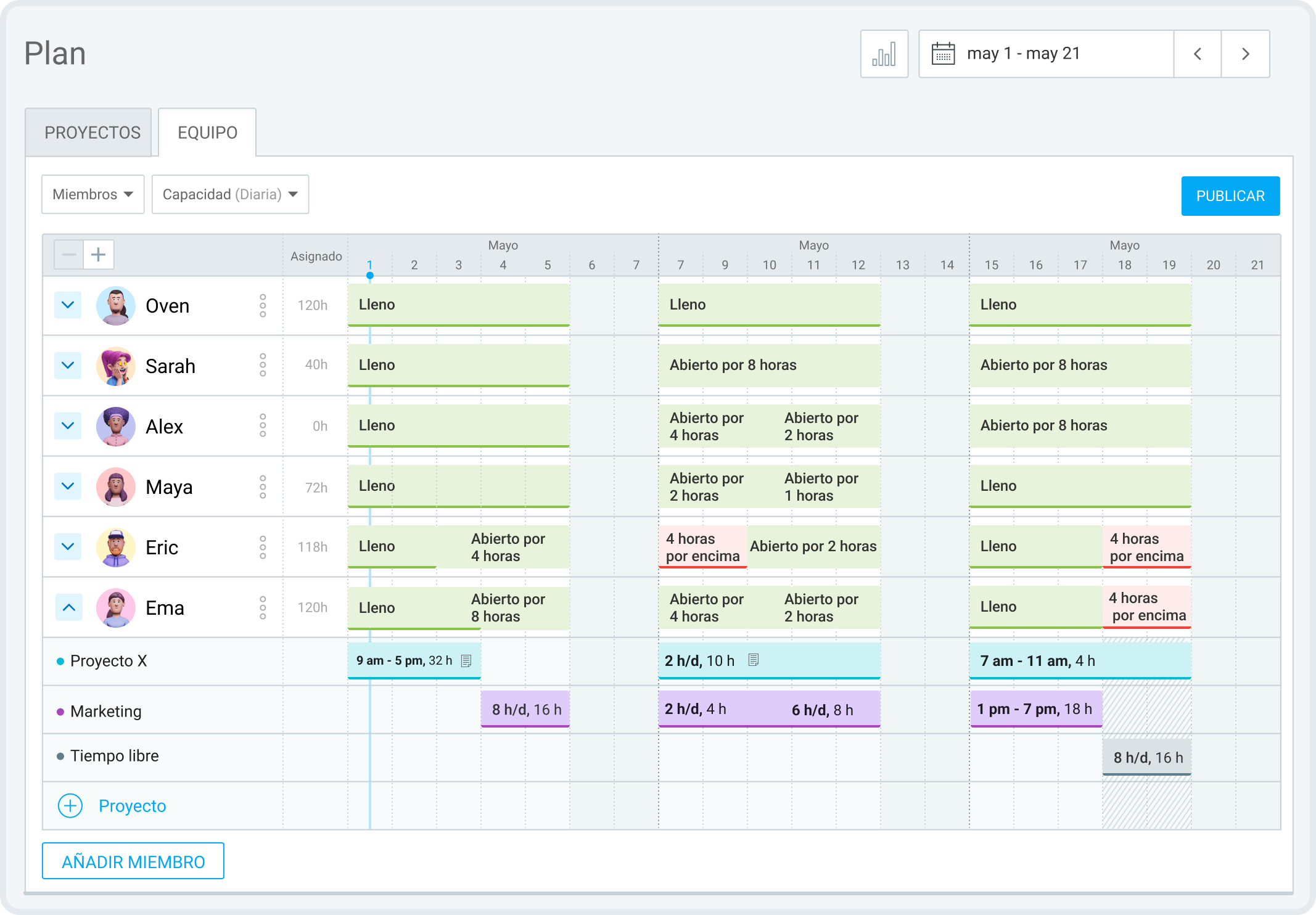
3. Falta de planificación
La planificación de equipos no está disponible en Toggl Track. Tanto para agencias como para pequeñas empresas, la planificación es fundamental para prevenir:
- La sobreasignación y subasignación
- Los cuellos de botella y retrasos en los proyectos
- Una mala asignación de recursos
Clockify gana aquí, ya que resuelve los problemas mencionados con una función de Planificación totalmente adaptable.
4. Falta de capturas de pantalla
Toggl Track no toma capturas de pantalla debido a su estricta política de privacidad de los empleados. Sin embargo, depender únicamente de la información proporcionada por el usuario podría dar lugar a la pérdida de tiempo. Sin pruebas tangibles, no se pueden tomar medidas disciplinarias ni exigir responsabilidades.
Si buscas una monitorización no intrusiva, Clockify hace capturas de pantalla borrosas para proteger la privacidad del usuario y proporcionar una prueba visual del trabajo realizado.
Descubre cómo Clockify gestiona tus datos ➜
5. Integraciones más directas
Toggl Track cuenta con una amplia gama de integraciones nativas. Su sincronización bidireccional con Salesforce, Jira y Asana le otorga una ventaja en este aspecto. Por otro lado, Clockify ofrece sincronización bidireccional con Jira y seguimiento unidireccional para otras aplicaciones mediante extensiones web; al instalarlas, se añade un botón de temporizador de Clockify a dichas aplicaciones.
6. Limitaciones del plan gratuito
Clockify y Toggl Track tienen planes gratuitos similares, con algunas diferencias notables.
En cuanto a la propiedad de los datos, Toggl Track elimina las cuentas gratuitas sin tiempo registrado después de 6 meses. En cambio, Clockify almacena tus registros de tiempo indefinidamente en todos los planes, a menos que elimines el espacio de trabajo o tu cuenta.
Además, Toggl Track ofrece un resumen semanal del tiempo del equipo solo para administradores. Por su parte, el Panel de equipo de Clockify muestra un desglose visual de la actividad reciente de los empleados. Es configurable por fecha y accesible para todos, pero puedes configurar quién puede ver qué.
Los resúmenes claros y en tiempo real ayudan a las pequeñas empresas a identificar y solucionar problemas. Asimismo, los propietarios de agencias con trabajo estacional quieren que sus cuentas estén disponibles incluso después de 6 meses sin actividad. Por lo tanto, Clockify se impone en este aspecto.

Toggl Track vs. Clockify: Comparación de funciones
Para ayudarte a tomar la mejor decisión para tu equipo, analizaremos las funciones de Toggl Track en comparación con Clockify.
| Motivos para cambiar | Clockify | Toggl Track |
|---|---|---|
Límites de usuarios del plan gratuito | Seguimiento e informes de tiempo flexibles – Retención de datos indefinida, a menos que los elimines – Seguimiento ilimitado de proyectos, clientes y etiquetas – Hasta 5 usuarios – Informes Resumidos, Detallados y Semanales – Exportación de informes en PDF – Panel del equipo con información visual rápida – 30 solicitudes de API por hora – 3 webhooks por espacio de trabajo – Soporte humano 24/7 por chat, correo electrónico y teléfono | Seguimiento de tiempo sencillo – Eliminación de la cuenta tras 6 meses de inactividad – Hasta 5 usuarios – Informes resumidos, detallados y de carga de trabajo – Exportación de informes en PDF – Resumen del administrador que muestra las horas del equipo – 30 solicitudes de API por hora – 1 webhook – Soporte por chat de baja prioridad |
| Funciones de monitorización | Monitorización conforme a la normativa – Quiosco con PIN y código QR – Ubicaciones GPS durante el trabajo – Capturas de pantalla borrosas – Registro de sitios web, aplicaciones y archivos abiertos | Observación limitada – Seguimiento de URL y aplicaciones visitadas |
| Precios por usuarios | Precios asequibles – 1 plan gratuito permanente – Los planes de pago empiezan desde 3,99 $ por usuario al mes (con facturación anual) – Un equipo de 30 personas cuesta desde 119,70 $ al mes (con facturación anual) – Bajo coste por usuario, incluso para equipos grandes | Precios Premium – 1 plan gratuito permanente – Los planes de pago empiezan desde 9 $ por usuario al mes (con facturación anual) – Un equipo de 30 personas cuesta desde 270 $ al mes (con facturación anual) – Aumento significativo del precio por usuario para funciones avanzadas |
Profundidad de integración | Integraciones versátiles – Calendarios: Google Calendar (gratis) Outlook Calendar (gratis) – Comunicación: Pumble (gratis) Slack (gratis) – Planificación de proyectos: Plaky (gratis) Jira (gratis) Asana (gratis) – CRM: Salesforce (gratis) – Facturación: QuickBooks (de pago) – Añade tu herramienta: un creador de integraciones personalizadas (gratis) – Más de 100 extensiones de navegador gratuitas – CAKE.com Marketplace con más de 100 complementos | Integraciones nativas más potentes – Calendarios: iCalendar (de pago) Google Calendar (gratis) Outlook Calendar (gratis) – Comunicación: Slack (gratis) – Planificación de proyectos: Toggl Plan (gratis) Jira (de pago) Asana (gratis) – CRM: Salesforce (de pago) – Facturación: QuickBooks (de pago) – API de Toggl Track, un creador de integraciones personalizadas (gratis) – Más de 100 extensiones de navegador gratuitas |
| Facturación | Facturación todo en uno – Importación de tiempo facturable registrado – Edición de entradas importadas – Adición de gastos, descuentos e impuestos – Exportación como PDF, CSV y Excel – Seguimiento del estado de las facturas – Facturas recurrentes – Redondeo de tiempo | Personalización mínima – Generación de facturas a través de informes – Las facturas creadas no se pueden editar – Añadir cargos e impuestos personalizados – Exportar como PDF – Redondeo de tiempo |
| Planificación | Programación integrada – Visualización de línea de tiempo – Planificación de capacidad – Indicadores de horas extras – Seguimiento de hitos – Edición mediante arrastrar y soltar – Visibilidad de ausencias | Herramienta independiente – Toggl está transformando actualmente Toggl Plan (una herramienta de programación) en una nueva herramienta llamada Toggl 2.0 para integrar la planificación, la gestión de proyectos y la gestión de ausencias |
| Ideal para | Empresas pequeñas y medianas y agencias que buscan crecimiento asequible, soluciones de gestión flexibles y monitoreo conforme a la normativa. | Pequeñas agencias y freelancers que priorizan el seguimiento sencillo del tiempo, la privacidad de los datos de los empleados y la productividad personal |
Clockify vs. Toggl Track: Precios
A continuación, analizaremos Toggl Track y el plan Gratis de Clockify, junto con sus tarifas de facturación anuales y mensuales por usuario.
Planes y precios de Clockify vs. Toggl Track
| Nivel de plan | Clockify | Toggl Track | Valoración |
|---|---|---|---|
| Plan gratuito | 0 $ (máximo 5 usuarios) Seguimiento ilimitado, funciones esenciales de control de tiempo, informes básicos de tiempo e integraciones gratuitas | 0 $ (máximo 5 usuarios) Seguimiento ilimitado para cuentas activas, funciones básicas de control de tiempo, análisis de tiempo sencillo e integraciones gratuitas | Ambas aplicaciones ofrecen el mejor plan gratuito. Toggl Track ofrece acceso a integraciones nativas, como Jira, Asana y Salesforce. Sin embargo, la eliminación de la cuenta tras 6 meses de inactividad es un riesgo que se puede evitar con Clockify. |
| Nivel de pago 1 | Basic 3,99 $/usuario (facturación anual) 4,99 $/usuario (facturación mensual) Todas las funciones del plan Gratis, además de informes de tiempo personalizados, seguimiento de proyectos (edición masiva, estimación de tiempo), Quiosco, historial de tarifas facturables y servicios de asistencia | Starter 9 $/usuario (facturación anual) 10 $/usuario (facturación mensual) Todas las funciones gratuitas, además de análisis de tiempo y seguimiento de tareas por equipo (objetivos del equipo, estimación de tiempo y tareas del proyecto), y facturación | Clockify ofrece más funciones a mitad de precio, con mayor control del equipo y asistencia y configuración personalizadas. Si bien Toggl Track incluye facturación desde el principio, su precio elevado es más adecuado para usuarios individuales y equipos pequeños. |
| Nivel de pago 2 | Standard 5,49 $/usuario (facturación anual) 6,99 $/usuario (facturación mensual) Todas las funciones del plan Basic, además de gestión de ausencias, facturación avanzada y control de asistencia de empleados | Premium 18 $/usuario (facturación anual) 20 $/usuario (facturación mensual) Todas las funciones del plan Starter, además de datos históricos, informes totalmente personalizables, previsiones de proyectos e inicio de sesión único (SSO) | Clockify gana en precio. Si bien Toggl Track ofrece funciones de gestión de tiempo completo e informes, tiene un coste adicional. Por ejemplo, el plan Basic de Clockify ofrece datos históricos facturables, mientras que el plan Pro incluye informes y previsiones completas. Y ambos planes son más económicos. |
| Nivel de pago 3 | Pro 7,99 $/usuario (facturación anual) 9,99 $ (facturación mensual) Todas las funciones del plan Standard, además de planificación interactiva, pronóstico de proyectos, informes de rentabilidad y más opciones de control horario (temporizador forzado y seguimiento GPS) | Enterprise Precios ocultos Negociado durante una demostración gratuita Todas las funciones del plan Premium, además de un gerente de éxito del cliente dedicado, incorporación personalizada y soporte prioritario por chat y correo electrónico | Clockify ofrece precios transparentes y soporte al cliente equitativo para todos. El plan de Toggl Track determina la rapidez con la que recibes ayuda. Solo los miembros Enterprise reciben orientación personalizada, una ventaja para todos los miembros de pago de Clockify. |
| Nivel de pago 4 | Enterprise 11,99 $/usuario (facturación anual) 14,99 $ (facturación mensual) Todas las funciones del plan Pro, además de inicio de sesión único (SSO), aprovisionamiento SCIM y registros de auditoría | – | Clockify ofrece opciones avanzadas de seguridad y automatización, a diferencia de Toggl Track. Por ejemplo, las agencias pequeñas utilizan registros de auditoría para justificar sus precios, mientras que los equipos más grandes utilizan el aprovisionamiento SCIM para gestionar automáticamente los perfiles de los empleados. |
| Nivel de pago 5 | CAKE.com Bundle 12,99 $/usuario (facturación anual) 15,99 $/usuario (facturación mensual) Las 3 herramientas complementarias con acceso empresarial Clockify para el control del tiempo Pumble para la comunicación Plaky para la gestión de proyectos | – | CAKE.com combina sus tres aplicaciones complementarias para ofrecer las herramientas esenciales para cualquier equipo. Aunque Clockify, Pumble y Plaky están disponibles en todos los planes, este nivel ofrece acceso empresarial a las tres aplicaciones. Por otro lado, Toggl (la empresa matriz de Toggl Track) cuenta con otras dos herramientas, Toggl 2.0 y TogglWork, que se venden por separado. |
Ventajas clave de Clockify sobre Toggl Track
Analicemos las 6 características principales que hacen que Clockify supere a Toggl Track.
1. Facturación simplificada
A diferencia de Toggl Track, Clockify cuenta con una función de facturación integrada. Simplemente importa y personaliza el tiempo y los costes del proyecto y envía la factura al cliente.
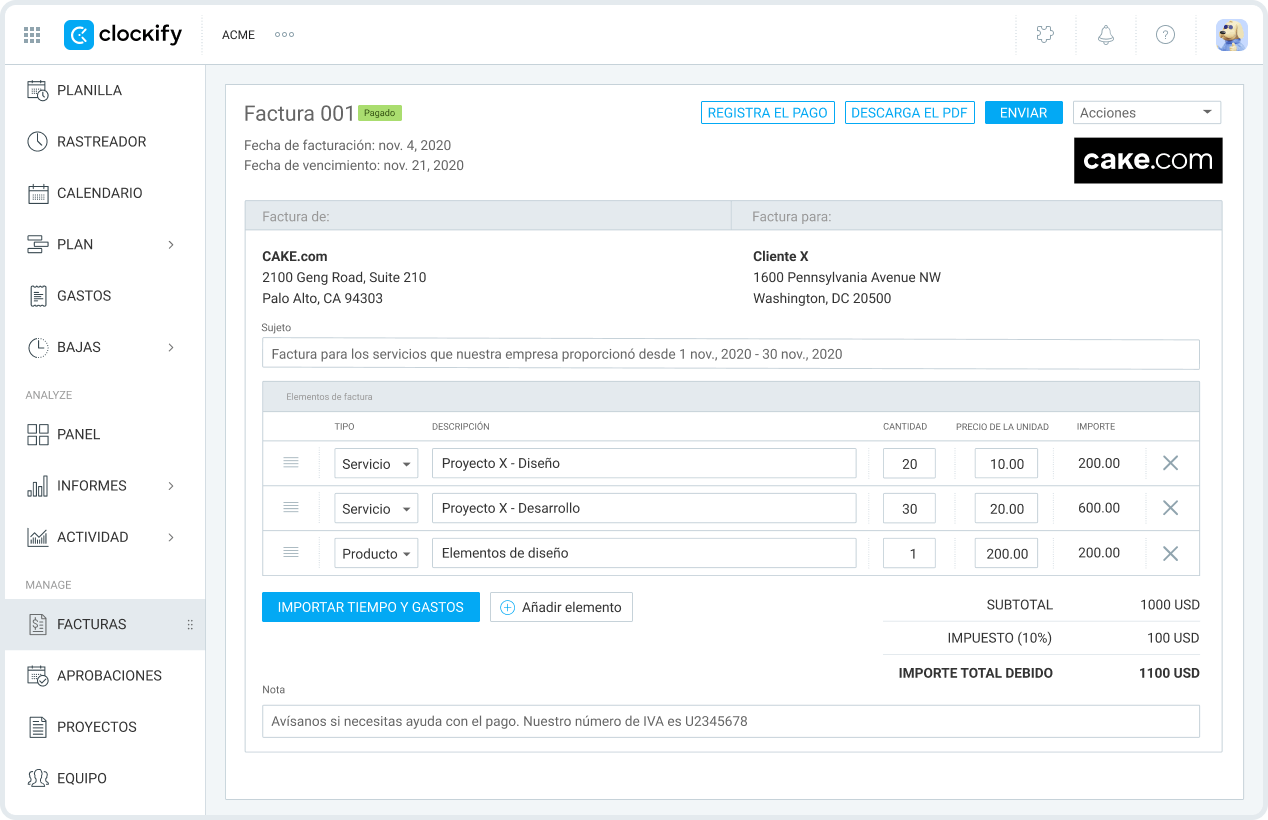
Clockify garantiza una facturación precisa para trabajos de agencia y proyectos con plazos definidos mediante:
- Creación de facturas detalladas
- Seguimiento del estado de la factura (enviada, pagada, parcialmente pagada, o anulada)
- Envío de recordatorios por correo electrónico para pagos pendientes
Simplifica la facturación con Clockify
2. Seguimiento de gastos
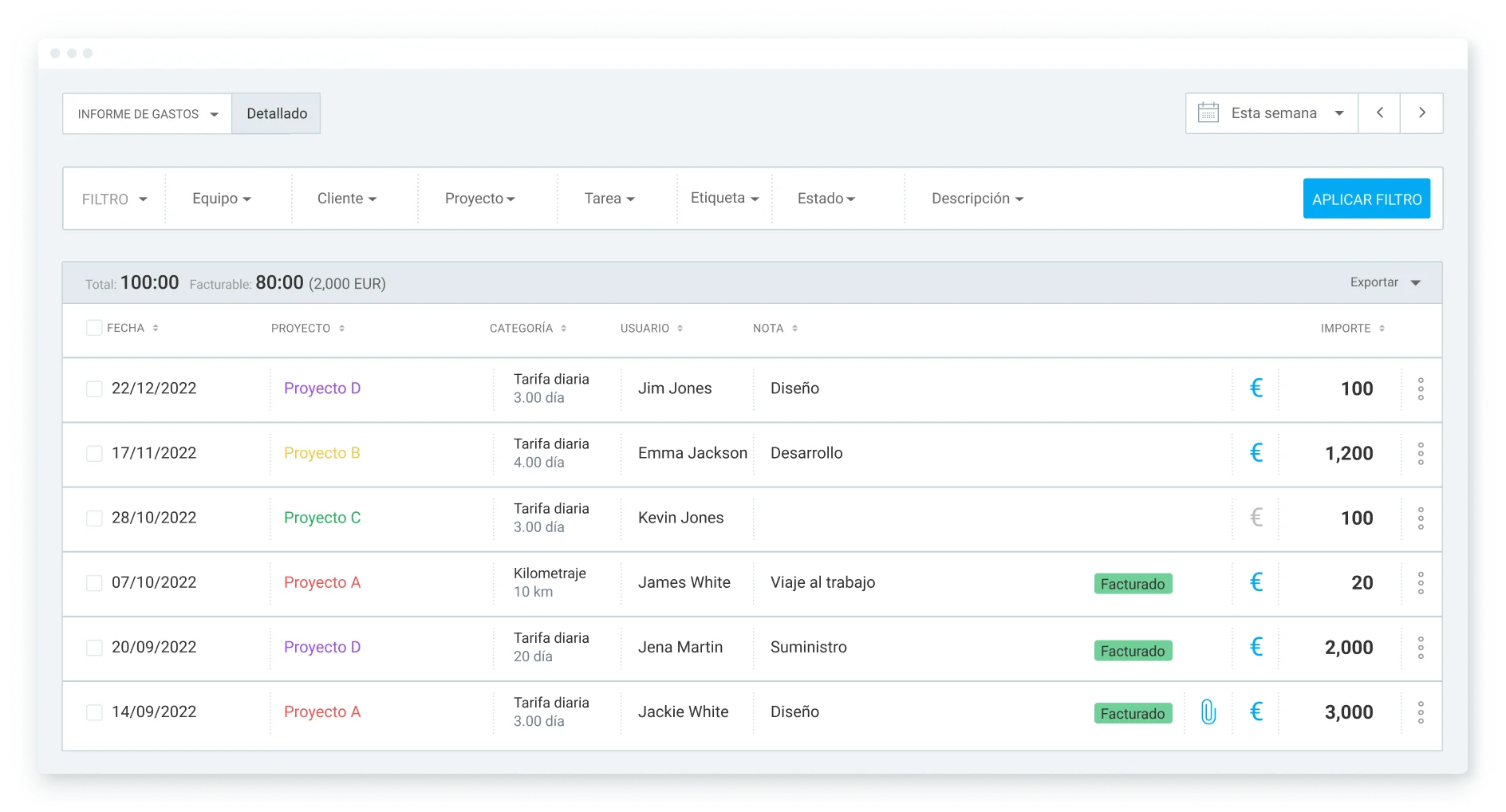
Clockify registra los gastos vinculados a proyectos u operaciones internas, una función que Toggl Track no ofrece. Puedes facturar los gastos del proyecto junto con las horas facturables para mayor transparencia con el cliente y calcular la nómina exacta en función de los costes internos.
3. Planificación integrada
Utiliza la función de Planificación de Clockify para equilibrar la carga de trabajo de los proyectos en lugar de depender de las integraciones de Toggl Track. Así es como funciona:
- Asigna recursos directamente en la línea de tiempo del proyecto
- Organiza los horarios de todos en un solo lugar
- Consulta quién tiene la agenda completa, quién no tiene suficiente trabajo o quién está ausente
- Controla las fechas límite y los hitos del proyecto
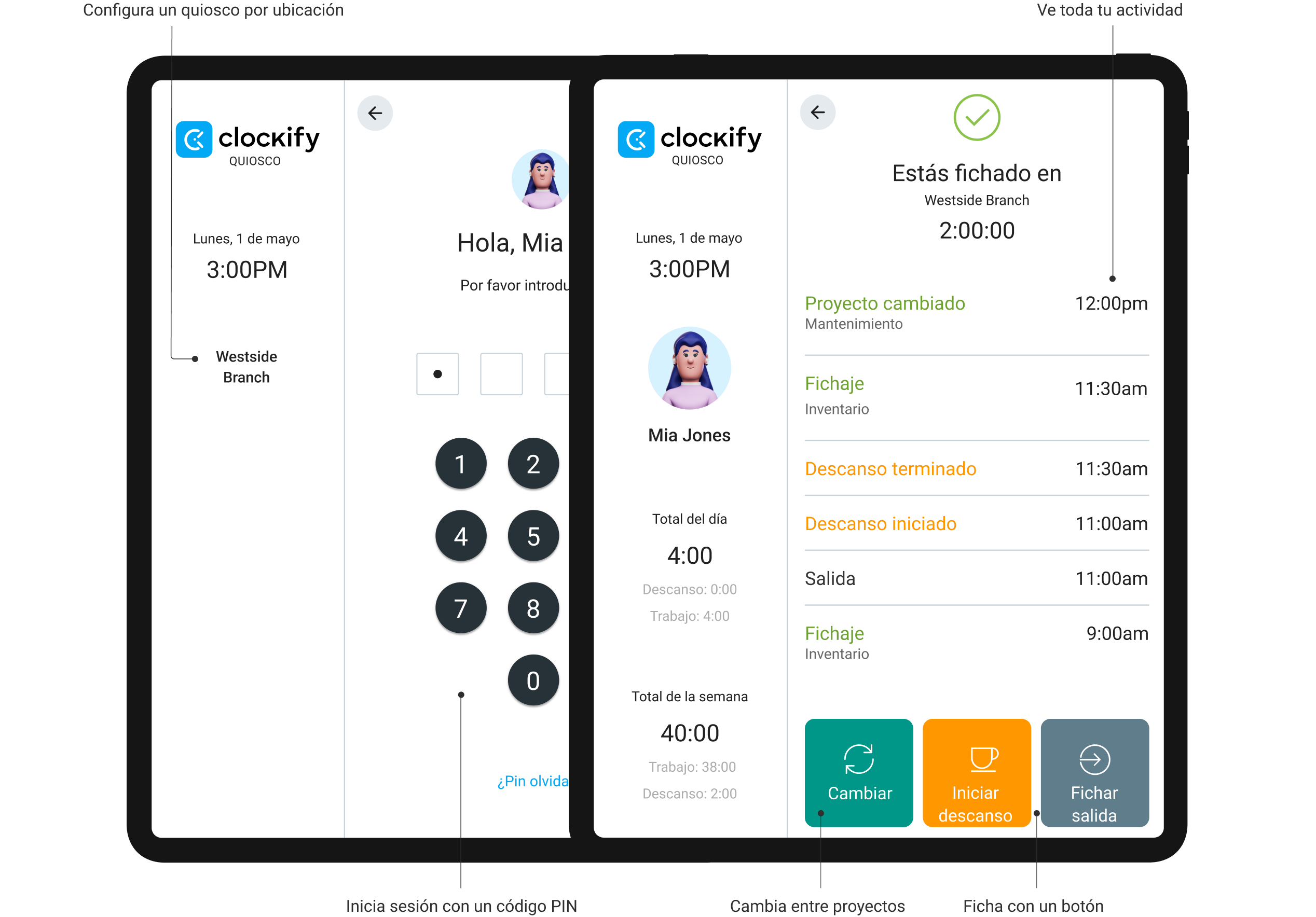
4. Control de asistencias con el Quiosco
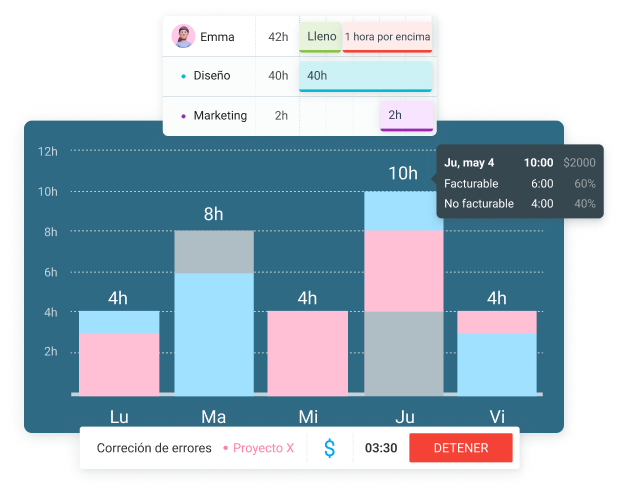
Si bien Toggl Track no registra la asistencia, Clockify ofrece una solución no intrusiva con el Quiosco: una función de fichaje de entrada y salida disponible en cualquier dispositivo, ya sea compartido o personal. Así puedes controlar el tiempo y la actividad del equipo sin comprometer la información privada de nadie.
💡 CONSEJO PRO DE CLOCKIFY
Configura el quiosco de Clockify para controlar fácilmente a los trabajadores temporales durante tu colaboración:
5. Gestión eficaz de ausencias
Aprovecha la función de tiempo libre de Clockify para gestionar las ausencias sin interrumpir el trabajo diario. Esta función ofrece políticas de bajas predefinidas y adaptables para agilizar el seguimiento de las ausencias y la planificación de recursos.
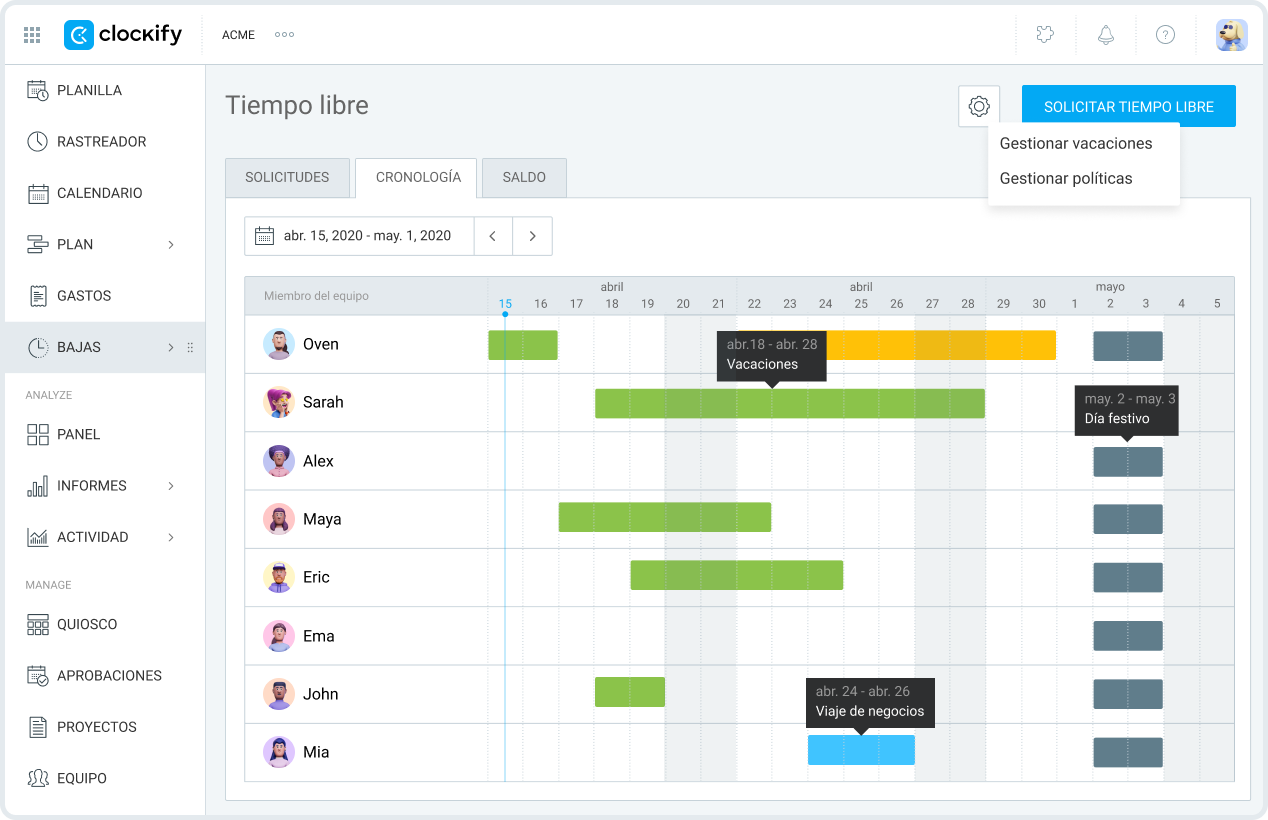
En cambio, con Toggl Track, debes solicitar la activación de las ausencias, algo que ahora es incierto tras el lanzamiento de Toggl 2.0.
Controla el tiempo libre con Clockify
6. Informes precisos con campos personalizados
Configura campos personalizados para tus entradas de tiempo o perfiles de empleados, como el puesto o un enlace. Esto te permite capturar datos específicos y obtener informes personalizados que Toggl Track no puede igualar. Por ejemplo, un campo de enlace te permite añadir un enlace a tu tarea de Jira o Plaky en un registro de tiempo activo.
💡 CONSEJO PRO DE CLOCKIFY
Optimiza la gestión de proyectos con las funciones de presupuesto, planificación, informes y más de Clockify:
Situaciones en las que Toggl Track resulta la mejor alternativa
Toggl Track es la mejor opción cuando los clientes buscan un seguimiento del tiempo más sencillo e integraciones clave. En particular, esta herramienta es ideal para:
- Freelancers y contratistas independientes que quieren una interfaz simple sin funciones de monitoreo
- Equipos con altos estándares de privacidad de los empleados, como la ausencia de seguimiento GPS o capturas de pantalla
- Usuarios que necesitan integraciones nativas, como Asana o Salesforce
Si bien Toggl Track es excelente para un seguimiento del tiempo claro y enfocado, los equipos en crecimiento pueden encontrarlo restrictivo y costoso. Por lo tanto, recurrirán a Clockify para obtener funciones más completas, como facturación y planificación. Al mismo tiempo, los planes económicos de Clockify ayudan a los equipos a evitar sobrecostes y aumentar los ingresos.
Para un análisis más detallado del rendimiento de Toggl Track en la práctica, consulta nuestra reseña completa de Toggl Track.
💡CONSEJO PRO DE CLOCKIFY
Minimiza el riesgo de sobrecostes o retrasos en el presupuesto con consejos de expertos:
¿Quién debería usar cada herramienta?
Los usuarios independientes encontrarán útiles tanto Clockify como Toggl Track. Ambas herramientas ofrecen funciones que aumentan la productividad, como el temporizador Pomodoro, calendarios, recordatorios de seguimiento del tiempo y detección de tiempo de inactividad.
El uso empresarial es donde las cosas se complican. Toggl Track está diseñado para quienes promueven la autonomía individual. Por otro lado, Clockify ofrece monitoreo y rendición de cuentas discretos, lo que lo hace ideal para agencias de servicios con trabajadores remotos y de campo.
Cómo cambiar de Toggl Track a Clockify
Sigue 3 sencillos pasos para importar tus datos de Toggl Track a Clockify y garantizar una transición sin problemas.
1. Descarga tu informe de Toggl Track
Una vez que inicies sesión en Toggl, ve a Informes detallados y selecciona el rango de fechas deseado para acceder a tus datos. Puedes filtrar la exportación para incluir sólo los proyectos cuyo tiempo quieres registrar en Clockify.
Luego, exporta el informe como un archivo CSV.
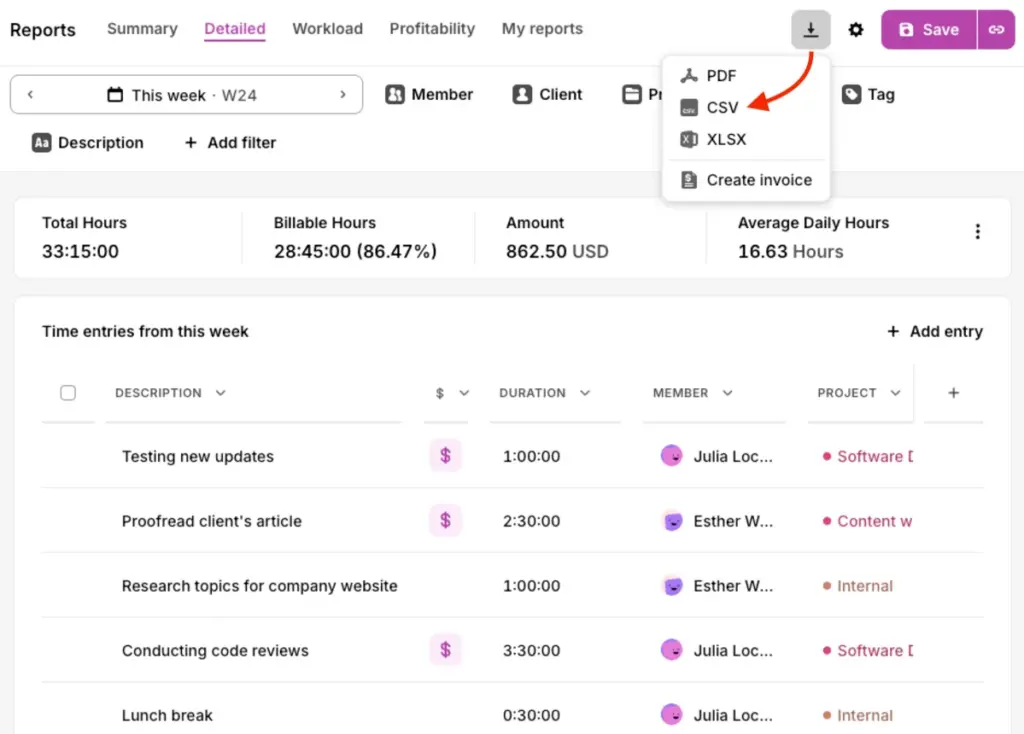
Nota: El plan gratuito de Toggl Track no incluye la exportación a CSV, por lo que esta opción solo estará disponible en los planes de pago.
2. Edita el archivo antes de importarlo
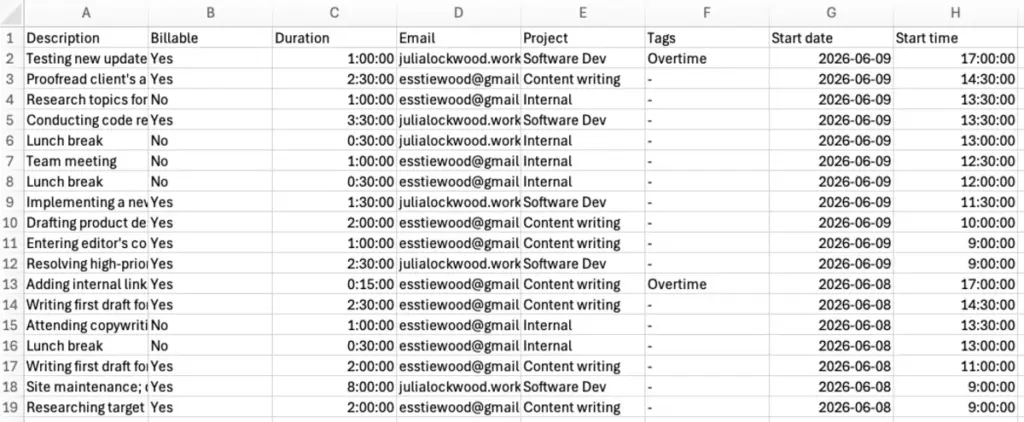
Al preparar el archivo CSV, asegúrate de que los nombres de las columnas coincidan con alguno de los siguientes campos de Clockify:
- Proyecto
- Cliente
- Tarea
- Etiquetas
- Correo electrónico
- Fecha de inicio
- Hora de inicio
- Duración
- Facturable
- Descripción
Además, verifica que el formato de fecha sea compatible con alguna de las opciones de formato de Clockify.
Antes de migrar cualquier dato, debes primero configurar a tus usuarios. Para ello, sube un archivo aparte y elige el tipo de importación de Usuarios completos o invita a los empleados a tu espacio de trabajo de Clockify. Una vez que se hayan unido, empieza a importar los datos y la aplicación los vinculará automáticamente con las personas correspondientes.
3. Importa tu archivo a Clockify
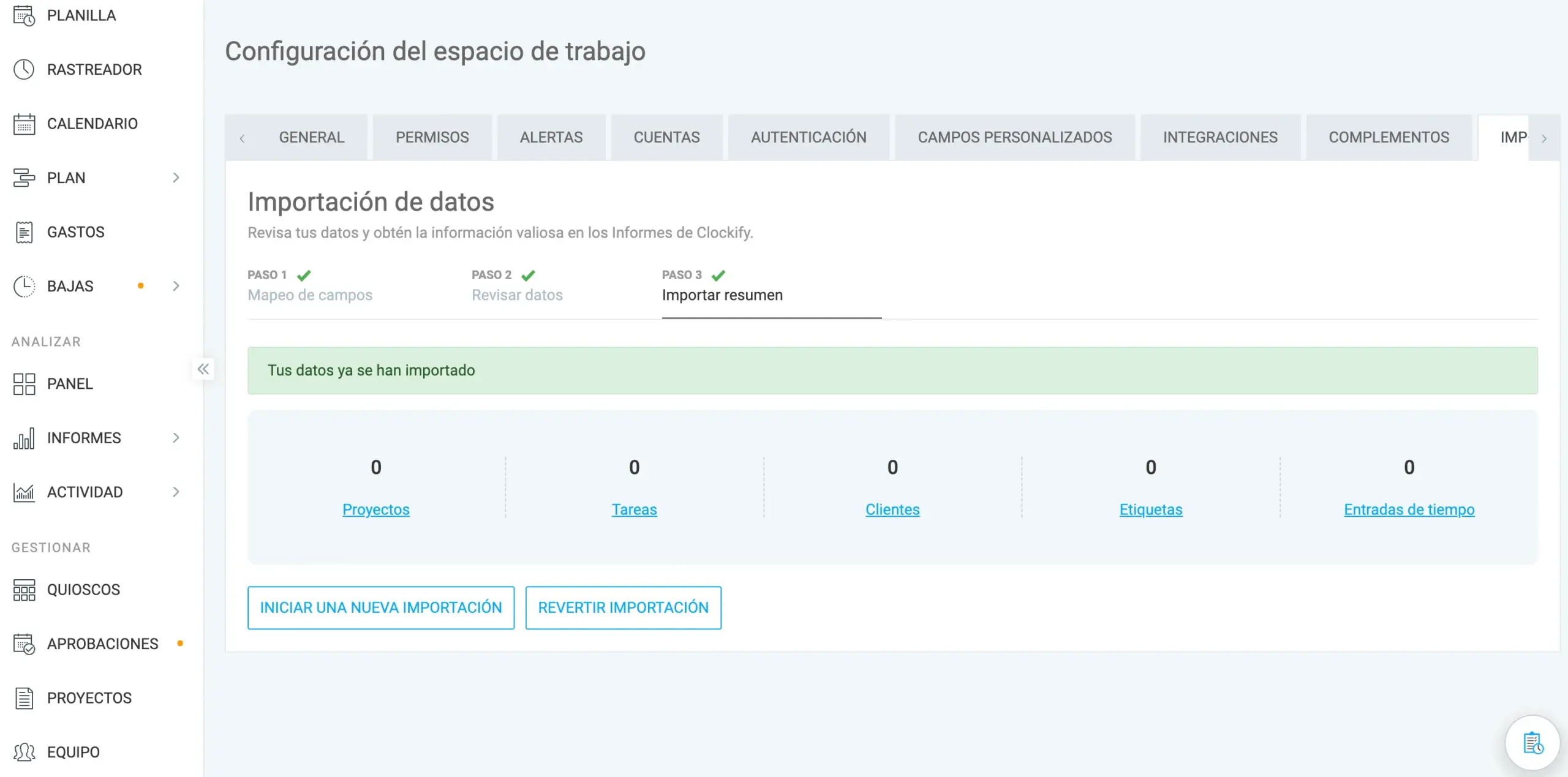
Cuando tu archivo esté listo, ve a la aplicación web de Clockify y busca la pestaña Importación en la Configuración del espacio de trabajo. Arrastra tu archivo a la ventana de importación de datos y la aplicación analizará qué proyectos, clientes, tareas o etiquetas necesita crear.
El siguiente paso muestra un desglose de tus registros de tiempo organizados por nombre de campo para una revisión final. Tras hacer clic en Importar, recibirás una notificación cuando la importación de datos se haya completado.
Mientras tanto, no dudes en contactar con nuestro equipo de soporte en vivo, con gusto te ayudarán a resolver cualquier problema.
Reglas de formato a seguir
Si tu archivo CSV no coincide con el formato de Clockify, la aplicación te indicará que formatees los datos correctamente antes de importarlos de nuevo.
Edita tu archivo en cualquier editor de texto o Excel para obtener una visión general más completa. Si usas Excel, la información debe estar organizada en columnas: la categoría en la primera fila y los valores en las filas siguientes.
En el editor de texto, la información debe estar separada por comas. Específicamente, la primera fila debe enumerar las categorías de datos. Las demás filas deben contener la información específica correspondiente a cada categoría.
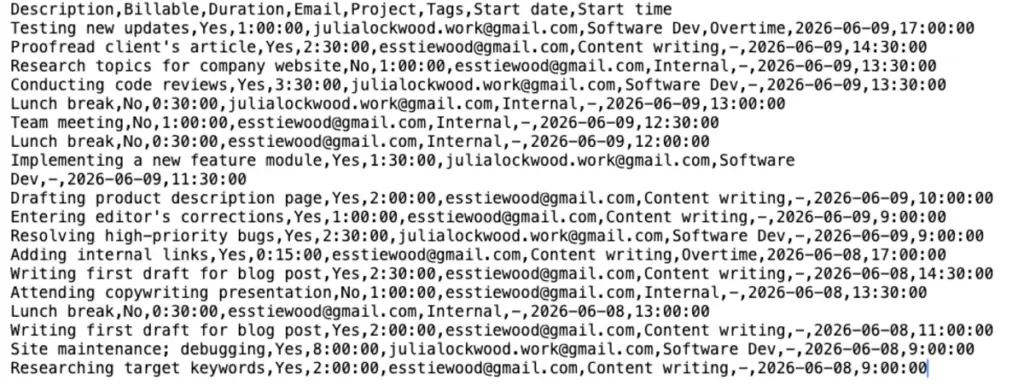
Para evitar errores de formato de fecha u hora, asegúrate de que el formato en la Configuración de perfil coincida con el del archivo. También puedes cambiar el formato en el archivo, pero esto requiere más trabajo.

Resumen de reglas de formato
Aquí tienes un resumen rápido del formato:
- Puedes importar un número ilimitado de archivos CSV, siempre que cada uno tenga menos de 10 MB.
- Solo los administradores pueden importar datos.
- No se pueden cargar tareas sin el proyecto al que están vinculadas.
- El orden de las columnas no es importante.
- Las direcciones de correo electrónico de los usuarios en Clockify deben coincidir con las del archivo.
- Si has activado los campos obligatorios en tu espacio de trabajo de Clockify, tu archivo debe contener columnas que coincidan con esos campos.
- La columna Duración en el archivo debe coincidir con el formato de duración seleccionado en la Configuración del espacio de trabajo, por ejemplo, Completo (hh:mm:ss) o Decimal (1.15).
- Los valores de las columnas Hora de inicio y Fecha de inicio deben coincidir con los formatos de fecha y hora de la Configuración de perfil.
- La fecha y hora de finalización se calculan automáticamente en función de la hora de inicio y la duración.
- Marca los proyectos como facturables o no añadiendo Sí o No en la columna Facturable.
- Al preparar el archivo de un usuario, puedes incluir su nombre, correo electrónico, rol, grupo, tarifa facturable, tarifa de coste y capacidad de trabajo diaria (expresada en horas).
Tras importar tus datos, puedes explorar otras funciones de Clockify y personalizarlas a tu gusto.
Controla el tiempo con Clockify
Preguntas frecuentes sobre Clockify vs. Toggl Track
¿Aún no te puedes decidir entre las dos opciones? Aquí tienes las preguntas más comunes que comparan Toggl Track y Clockify. Consulta nuestras respuestas completas.
¿Es mejor Toggl Track o Clockify?
Clockify es mejor para:
- Seguimiento preciso de presupuestos y costes para proyectos con plazos definidos
- Facturación directa y facturas personalizables
- Planificación intuitiva e información sobre disponibilidad
- Control de ausencias y asistencia sencillo y conforme a la normativa
- Control de tiempo completo y gratuito, con actualizaciones asequibles
Toggl Track es mejor para:
- Control de tiempo intuitivo con un diseño sencillo
- Integración bidireccional con la gestión de proyectos
- Análisis de productividad personal
- Control de tiempo sin supervisión para equipos basados en la confianza
- Solución rápida de gestión del tiempo para usuarios individuales
💡CONSEJO PRO DE CLOCKIFY
¿Quieres tomar la decisión correcta? Lee nuestra comparativa de Toggl vs. Clockify vs. Harvest para elegir la mejor opción:
¿Es Clockify más asequible que Toggl Track?
Sí, Clockify es más asequible que Toggl Track, con tarifas anuales y mensuales más bajas. De hecho, la diferencia de precio entre planes similares ronda el 50 %. Y lo que es más importante, Clockify ofrece una mejor relación calidad-precio con planes repletos de funciones a precios asequibles.
¿Clockify tiene un plan gratuito?
Sí, Clockify ofrece un plan gratuito permanente para hasta 5 usuarios (1 administrador + 4 usuarios), al igual que Toggl Track. Sin embargo, Clockify se distingue por su servicio de atención al cliente rápido y gratuito, disponible las 24 horas, los 7 días de la semana, y soporte telefónico. En este aspecto, Toggl Track se queda corto.
¿Cuánto cuesta Clockify al mes?
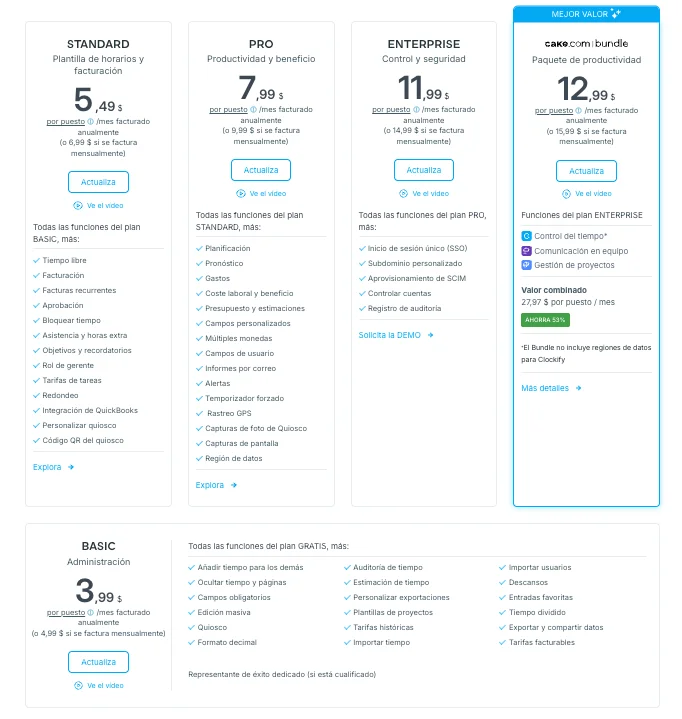
Los planes de pago de Clockify cuestan entre 3,99 $ y 15,99 $ al mes. Si la facturación es anual, el coste mensual por plan/usuario es:
- 3,99 $ (Basic)
- 5,49 $ (Standard)
- 7,99 $ (Pro)
- 11,99 $ (Enterprise)
- 12,99 $ (CAKE.com Bundle)
Si la facturación es mensual, el coste mensual por plan/usuario es:
- 4,99 $ (Basic)
- 6,99 $ (Standard)
- 9,99 $ (Pro)
- 14,99 $ (Enterprise)
- 15,99 $ (CAKE.com Bundle)
¿No tienes cuenta? Regístrate GRATIS
¿Cuánto cuesta Toggl Track?
Toggl Track cuesta entre 9 $ y 20 $ para los dos primeros planes de pago. Esta estimación no incluye el plan más completo (Enterprise), cuyo precio no se especifica.
Si la facturación es anual, el coste mensual por plan/usuario es de 9 $ (Starter) o 18 $ (Premium). Con la facturación mensual, el coste por plan/usuario es de 10 $ (Starter) o 20 $ (Premium).
¿Cuáles son las desventajas de Clockify?
A pesar de su buena oferta, Clockify tiene algunas desventajas. En primer lugar, sus funciones avanzadas de supervisión pueden resultar intrusivas si no se gestionan correctamente.
Además, desbloquear varias funciones puede saturar el panel de control. Sin embargo, puedes simplificarlo y resaltar los datos importantes con opciones de personalización, como ocultar páginas y anclar proyectos favoritos.
Algunos usuarios también consideran que las integraciones no están tan sincronizadas ni automatizadas. Por ello, el equipo de Clockify trabaja activamente para introducir nuevas integraciones, plugins y complementos.

¿Se pueden exportar datos de Toggl Track a Clockify?
Puedes exportar tus datos descargando un archivo CSV en la sección Informes de Toggl Track e importándolo a Clockify a través de la Configuración del espacio de trabajo.
Si bien el plan gratuito de Clockify permite importar archivos CSV, solo puedes usarlo para añadir:
- Proyectos
- Clientes
- Tareas
- Etiquetas