
Cost overruns are a common challenge in project management, impacting everything from project efficiency to client satisfaction.
However, you can minimize the risk of cost (or budget) overrun — with the right strategies and tools.
Here are the main causes of project cost overruns, tips for avoiding them, and expert insights.
- A cost overrun occurs when the actual costs of a project exceed the planned budget.
- Some of the main causes of cost overrun are inaccurate estimates, scope creep, poor risk management, and inflation.
- Managers can prevent a budget overrun by creating a comprehensive project plan, monitoring for warning signs, and establishing a scope change control plan.
- A project cost overrun is calculated by dividing the difference between the actual and budgeted costs by the budgeted cost, then multiplying by 100 to get the percentage.
What is a cost overrun?
A cost overrun occurs when the actual expenses of a project exceed the planned (or budgeted) amount. Cost overruns are a persistent issue across industries, often leading to team stress, strained stakeholder relationships, and reduced profitability.
Project cost overrun examples
Here are some examples of project cost overruns in the software, marketing, and construction industries.
Example #1: Software industry
A software team builds a mobile app for an initial budget of $50,000. During development, the client requests new features — push notifications and advanced search options — that weren’t in the original scope. These changes require extra development and testing time. As a result, the final cost increases to $70,000, leading to a budget overrun.
Example #2: Marketing industry
A client hires a marketing team to create a social media campaign with a $15,000 budget. During project execution, the team decides to produce extra video content to increase reach. These activities weren’t part of the original scope. Consequently, the total project cost increases to $18,000.
Example #3: Construction industry
A realistic example of a cost overrun in construction projects is an overrun caused by adverse weather conditions.
A construction team is hired to build an apartment building for an initial budget of $2 million. However, the project is affected by weeks of heavy rain, which have delayed certain outdoor tasks. Because of the delays, the team incurs extra labor and equipment rental expenses. This leads to a cost overrun, bringing the actual budget to $2.3 million.

Main causes of cost overrun
Cost overruns can occur for many reasons, including:
- Inaccurate cost estimation — It usually stems from over-optimism and insufficient historical data. Inaccurate estimates become visible earlier when you track time per task from day one, allowing you to compare estimated vs. actual hours at any point in the project.
- Scope creep — It happens when a project’s tasks or requirements gradually exceed the original project plan. Time tracking data can show that certain activities (e.g., small client requests) consistently take longer than anticipated. This helps teams identify and address scope creep early.
- Inadequate resource planning — The lack of real-time visibility into team capacity often results in some members being overloaded while others are underutilized. Also, assigning tasks to members who lack the necessary skills can cause inefficiencies, missed deadlines, and wasted spending.
- Communication issues — Misunderstood project requirements and ineffective team collaboration can lead to rework, delays, and ultimately a cost overrun.
- Poor risk management — Failure to identify and mitigate risks early (e.g., technical challenges) can result in unexpected costs. That’s why having a risk management plan with clear mitigation strategies is essential.
- Inflation — According to research on construction project costs, changes in the prices of materials, labor, and equipment significantly contribute to budget overruns.
- Supply chain disruptions — Raw material shortages and delivery issues can lead to project delays. They often force managers to seek alternative suppliers or pay premium prices for rushed orders.
💡 CLOCKIFY PRO TIP
Want to improve your project management? Find useful tips and tools in our article:
How to prevent cost overruns
Here are the steps every project manager should take to avoid project budget overruns.
Prevention step #1: Start with a solid plan
To be effective, a project plan has to include:
- Accurate project budget,
- Clear scope statement,
- Detailed schedule,
- Communication plan, and
- Risk management plan.
If unsure how to determine your project budget, use the 3-point estimating technique. It considers optimistic, pessimistic, and most likely cost scenarios to arrive at an estimate. This way, you get a balanced figure that’s less likely to be off.
To reduce financial risks, you can also establish a contingency fund. Set aside extra money — typically 10-20% of the total project cost — to cover unforeseen expenses that may arise during project execution.
Regarding your project scope, it’s best to organize it by using a Work Breakdown Structure (WBS). You break down the scope hierarchically into smaller components:
- Phases,
- Tasks,
- Subtasks,
- Deliverables, and
- Work packages (the smallest units of work that can be assigned to members).
This makes the project more digestible.
In addition to the project goals and deliverables, you need to define task durations, deadlines, and responsibilities. This way, everyone knows what they need to do and when.
💡 CLOCKIFY PRO TIP
To set clear and realistic project objectives, you can use the SMART criteria framework. Learn more here:
Your communication plan should outline:
- How you’ll share project information (via team chat app, email, meetings),
- Who’ll share it (project manager, team leads) and when, and
- Who’ll receive it (team members, sponsors, clients).
This improves transparency and decision-making.
As for your risk management plan, it should include steps to identify and address potential risks, along with who’s responsible for handling them. That way, project threats (e.g., a resource shortage) can be managed proactively.
It’s a good idea to create the project plan collaboratively. Our powerful time tracker, Clockify by CAKE.com, lets you share reports so your collaborators (e.g., key stakeholders) can see tracked time and expenses in real time.
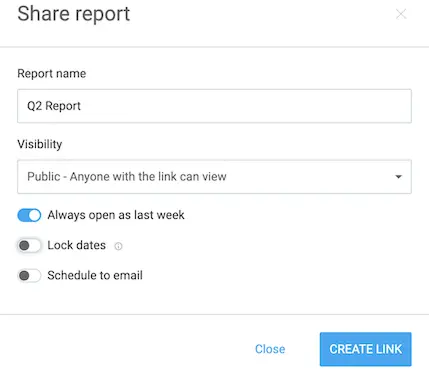
Once you have your project plan in place, you can begin work on the project.
Prevention step #2: Look for cost overrun warning signs
Even with thorough planning, budget overruns can still happen. That’s why you need to stay alert throughout the project and watch for warning signs.
Here are key red flags that signal a potential cost overrun:
- Your team’s unable to reach milestones on time,
- Communication among team members is infrequent or unclear,
- The project scope is unexpectedly growing,
- Some tasks need rework due to mistakes or change requests,
- Your spending progresses faster than the planned burn rate, and
- You’re experiencing a negative cost variance early in the project (you’ve spent more than the budgeted amount for the work completed).
Time tracking tools like Clockify can help you identify cost overrun warning signs early on. For instance, Clockify’s Forecasting predicts your project performance by showing you:
- Estimated time — the time it would take to complete the project based on your estimates,
- Scheduled time — the time you scheduled when assigning tasks to team members,
- Completed time — the time tracked by team members thus far, and
- Forecasted time — the project’s expected completion time based on hours tracked by that point.
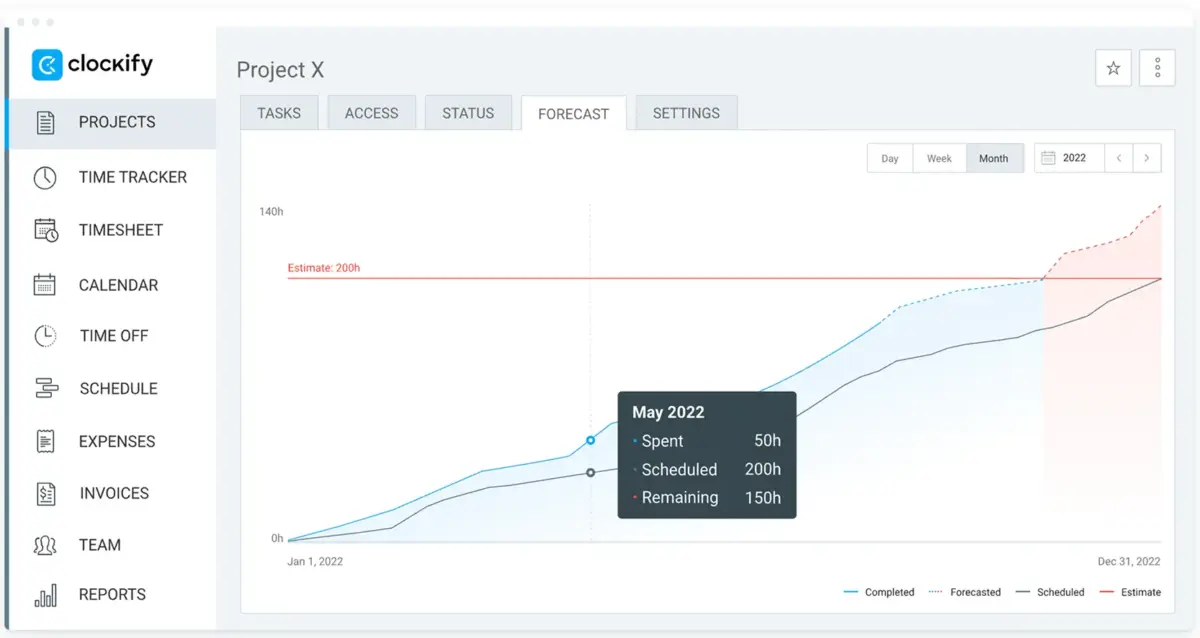
To ensure the forecasted time doesn’t exceed the estimated time, enable project alerts. You’ll get an email notification when the project reaches a set percentage of the estimated time.
You can also track project progress in Clockify by using budget estimates. In this case, you’ll get notified when a project reaches a set percentage of its estimated budget.
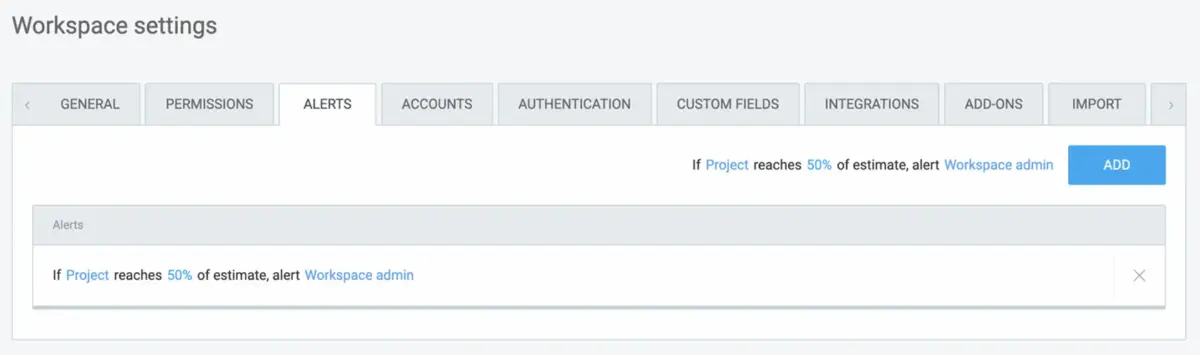
By detecting cost overrun warning signals in the beginning stages of your project, you can implement measures to ensure your project stays within budget.
Track project budget in Clockify
Prevention step #3: Devise a scope change control plan
To manage scope creep effectively, you’ll need a robust change control plan. A typical change management process includes these steps:
- Identify the change,
- Determine the goals of the change,
- Define the timeline of change implementation, and
- Assemble a team in charge of change management.
When a new client request emerges, make sure to document that alteration — not just discuss it informally. This prevents the change from going unnoticed in the project.
It’s also crucial that you understand the purpose of a change — whether it’s to improve product quality or meet new client expectations. In fact, teams should be careful when making improvements, as it can easily lead to complications.
Founder of a platform focused on browser-based tools, Bhavin Sheth, shared the problems he experienced due to chasing perfection in project development:

“One situation I remember was when I kept improving a feature beyond the original requirement. It did not break the project, but it delayed the launch and increased the effort more than expected.”
Defining how long a scope change will take is also important. It allows managers to adjust the project schedule more effectively.
Finally, you should form a team responsible for analyzing and approving changes to your project scope. This type of team usually consists of:
- Project manager,
- Subject matter experts, and
- Sponsors.
Having a change management team ensures every scope modification is properly reviewed before implementation. This helps you maintain control over the scope and reduce unnecessary costs.
To detect scope expansion early, you should track time per project task. With Clockify, your team can track their time spent on tasks, and you can later analyze data in reports. By doing so, you get to spot tasks that are taking longer than planned and take action to prevent further inefficiencies.
How to deal with project cost overruns
When a budget overrun is in progress, you need to take immediate action to minimize its impact and get the project back on track. Here are the steps you should take.
Recovery step #1: Audit your spending
Reviewing your spending will help you understand where the money has gone. Specifically, it’ll help you identify what drove the overrun and pinpoint inefficiencies in resource usage.
To check how your team spends their time across tasks and projects, use Clockify’s Summary report. Here, you get to see:
- Time spent on each task,
- Estimated time for each task, and
- Amounts earned.
This way, you can spot where your team’s tracked hours diverged from estimates.
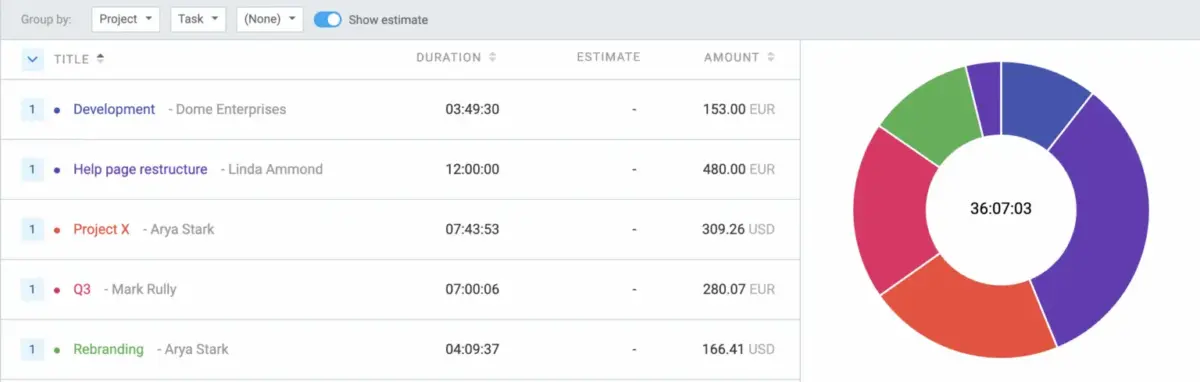
Say you notice that certain tasks consume more time than expected. In that case, you can find ways to improve your team members’ efficiency or reallocate tasks.
Once you determine the root cause of the overrun, update your budget to establish a realistic financial roadmap for the rest of the project.
💡 CLOCKIFY PRO TIP
Learn more about the importance of precise time estimation in project management here:
Recovery step #2: Reforecast the project budget
To reforecast your project budget, you need to:
- Estimate costs of the remaining work,
- Factor in any changes to scope, resources, or prices, and
- Recalculate the expected final project cost.
Basically, you create a realistic financial forecast based on the current project conditions (rather than relying on the original plan). This allows for better decisions and planning.
Recovery step #3: Increase stakeholder communication
You should notify your stakeholders (project sponsors and client) of a cost overrun as soon as possible. This way, they have enough time to understand the situation, ask questions, and make informed decisions (e.g., whether they’ll approve additional budget or reduce the project scope).
Essentially, you must inform stakeholders about:
- Current overrun status,
- Causes of the overrun, and
- Expected impact on the project’s budget and timelines, as well as proposed actions to address it.
When a cost overrun becomes an issue, ignoring it often feels like the only option. However, according to Paul Naybour, the founder of a project management training company, discussing the overrun is imperative:

“The worst thing to do in such a situation would be to pray that everything will work out just fine. Instead, discuss what happened, provide realistic estimates, and suggest potential actions: descope, postpone, or increase the budget, along with the consequences of each one.”
By being open with your stakeholders and presenting solutions — not just problems — you’ll maintain trust. You’ll also increase the chances of bringing your project back under control.
Recovery step #4: Implement cost controls
To prevent further overspending, you should take certain measures:
- Put a freeze on all non-essential expenses (e.g., non-critical training),
- Renegotiate vendor contracts (or explore cheaper alternatives for materials), and
- Move resources from low- to high-priority activities.
Furthermore, you should focus on cutting no-value work. According to an article on lessons learned from construction projects, gold plating (or adding unrequested features to a project to impress a client) is often counterproductive and leads to unnecessary costs.
By implementing strong cost controls, you’ll minimize waste and protect the remaining project budget.
How to calculate cost overrun
To calculate a cost overrun (in percentages), use the formula below:
[(Actual project expenses – Budgeted amount) ÷ Budgeted amount] x 100 = Project cost overrun percentage
Say your actual project expenses amount to $10,000 (determined based on your team’s tracked hours and their labor rates). We’ll also say your budgeted amount equals $8,000. Here’s how you’ll calculate your project cost overrun:
[($10,000 – $8,000) ÷ $8,000] x 100 = [$2,000 ÷ $8,000] x 100 = 0.25 x 100 = 25% over budget
Monitor project progress and track expenses with Clockify by CAKE.com
As a time-and-expense tracking tool, Clockify can help you keep project costs in check. Using a time tracking app in addition to your usual project management software helps you detect potential cost overruns early.
That’s because, in many cases, time delays increase project costs. By having your team track project time on each task, you’ll be able to detect any potential time overruns and prevent them.
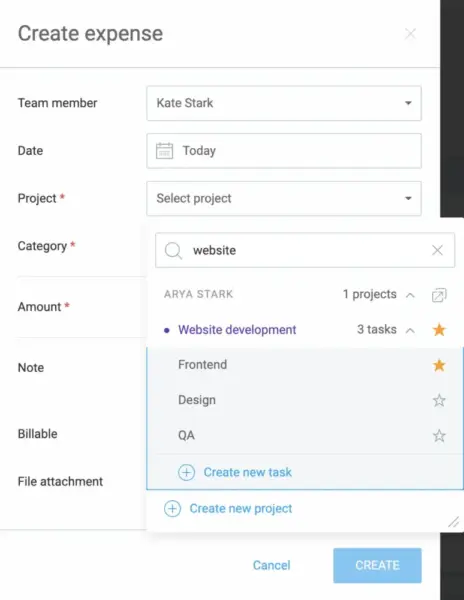
Additionally, you can have your team account for all project expenses by adding them in Clockify. When adding new expenses, the team can specify the cost type and amount, and attach receipts.
Try Clockify by CAKE.com today
With Clockify, managers can:
- Create as many projects and tasks as they want,
- Track billable and non-billable hours,
- Favorite projects and tasks for easier workflow, and
- Hide tracked time and expenses from regular users for better control over data.
This way, you can bill clients accurately and maintain efficient daily operations.
To boost your team’s productivity, try the CAKE.com Bundle. Alongside Clockify, you’ll get an effective communication app Pumble, and user-friendly project management software Plaky — at 53% off.

FAQs about cost overruns
In the next section, you can find answers to some frequently asked questions about budget overruns.
What causes cost overrun?
A cost overrun is usually caused by inaccurate cost estimation, poor planning, ineffective communication, and price fluctuations (inflation).
How to avoid cost overrun?
To avoid a cost overrun, teams should develop a comprehensive project plan, actively monitor for early warning signs, and ensure all scope changes are documented and controlled.
💡 CLOCKIFY PRO TIP
If you’re struggling to make effective long and short-term plans, check out this article:
How to manage cost overrun?
To manage a budget overrun, you should identify the root cause, assess its impact, and take corrective actions (e.g., by optimizing resource allocation and renegotiating vendor contracts).
How do you calculate overrun?
The formula for calculating your project cost overrun goes like this:
[(Actual project expenses – Budgeted amount) ÷ Budgeted amount] x 100 = Project cost overrun percentage
For a calculation example with real numbers, refer to the How to calculate cost overrun section of this article.
Who pays for cost overruns?
The party responsible for cost overruns is typically the contractor, the client, or both, depending on the contract type.
In fixed-price contracts, the contractor agrees to deliver the project at a set price, so they usually bear the risk of cost overruns. With cost-plus contracts, the client generally bears the risk — they cover the actual project costs plus an additional fee for the contractor.
In hybrid contracts, cost overruns are typically shared between the contractor and the client (according to the agreed terms).
💡 CLOCKIFY PRO TIP
A time-and-materials contract offers flexibility for unpredictable projects, but it also requires detailed cost tracking and a high level of trust between the client and the contractor. Learn more about this contract type in the resource below:
What is another name for a cost overrun?
A cost overrun is also known as a budget overrun, cost increase, or a budget exceedance.
What is the difference between cost escalation and cost overrun?
Cost escalation refers to an anticipated increase in project costs due to inflation, market shifts, or other external factors. Conversely, a cost overrun is when total project costs exceed the initial budget unexpectedly, regardless of cause.
What is cost overrun or underrun?
A cost overrun happens when the actual project costs exceed the budgeted amount. A cost underrun occurs when they come in below the budget.
How we reviewed this post: Our writers & editors monitor the posts and update them when new information becomes available, to keep them fresh and relevant.